












“Nonprofits are last to adopt innovation and technology.” This is a common criticism of our sector. As the Great Wealth Transfer begins, the biggest threat to the future health and growth of charities isn’t a lack of generosity; it’s using fundraising technology built for yesterday’s donors. Over $100 trillion dollars will be transferred from the Silent Generation and Baby Boomers to Gen X, Millennials, and Gen Z over the next 20 years, with an estimated $20 trillion being donated during that period – and the reality is, most charitable organizations are not set up to capture the significant fundraising revenue that comes with this transition.
Today, most charitable organizations are operating in the 2000s: happy to accept checks by mail and card donations online while throwing large, expensive galas to squeeze major gifts out of the same shrinking cohort of aging wealthy donors approaching retirement. The current state of fundraising innovation in the nonprofit sector is analogous to online inbound marketing in the early 2010s, limited largely to using social media, email, and other online channels to raise cash donations. To attract, acquire, and retain the next generation of young, wealthy, and generous digital donors set to inherit trillions of dollars in assets, nonprofits must not only adopt but also embrace innovation.
Preparing for this future requires charitable organizations to address two key questions:
- How do I engage the young donors of today and cultivate them to be my recurring and major gift givers of tomorrow?
- How will my organization fundraise in a fully digital donation future?
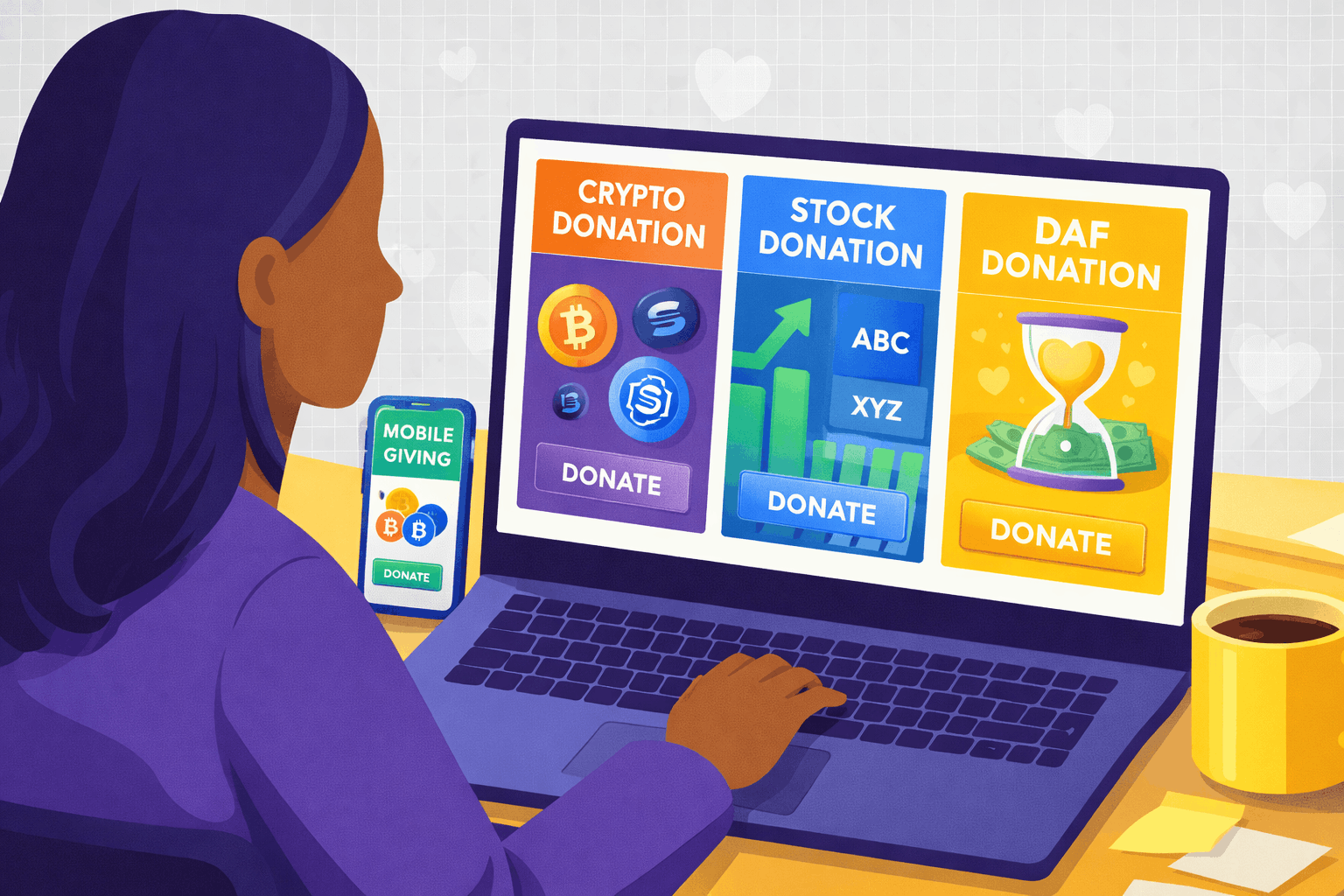
The time has come to redefine Digital Fundraising. The focus must shift from executing strategies that worked at the outset of the internet to implementing the technology and solutions that make it seamless for donors to give whatever asset they want, however they want, whenever they want, directly on your mobile or website experience. In a world where AI is making marketing increasingly uniform, cost-effective, and ubiquitous, nonprofit organizations must open and modernize all possible doors to accommodate how their donors give to gain an edge in a competitive fundraising environment.
At The Giving Block, this past year marked a critical inflection point for the future of fundraising strategy. In 2025, we processed over $100 million worth of cryptocurrency donations on behalf of our thousands of nonprofit clients and have now processed over $300 million since our founding in 2018. We also saw online digital stock and donor-advised fund (DAF) donation processing volumes double year-over-year, signalling a meaningful uptick in donor adoption and a shift in behavior. Digital donation methods that were once considered emerging are now required components of a future-forward Digital Fundraising strategy.
The nonprofits that win in the future will be equipped to meet Gen X, Millennial and Gen Z donors where they already are—in digital wallets, asset accounts, and in moments of financial opportunity. And when they do, this next generation of donors will respond. This is a generation that gives more thoughtfully, builds relationships with brands, cares about your organization’s story, and wants to donate securely within your website and mobile giving experience – not through an advisor or broker. We are watching generosity become faster, more personal, and deeply woven into the daily digital financial lives of supporters. That’s not a small shift. That’s a redefinition of how charitable giving works.
A new era of philanthropy is here. Donors expect flexibility and choice, and nonprofits deserve the same. The Giving Block team is energized every day by the passion of our nonprofit clients and inspired to push Digital Fundraising forward to ensure that charitable organizations are no longer last to benefit from advances in technology, but first.
Ben Pousty
President, The Giving Block