















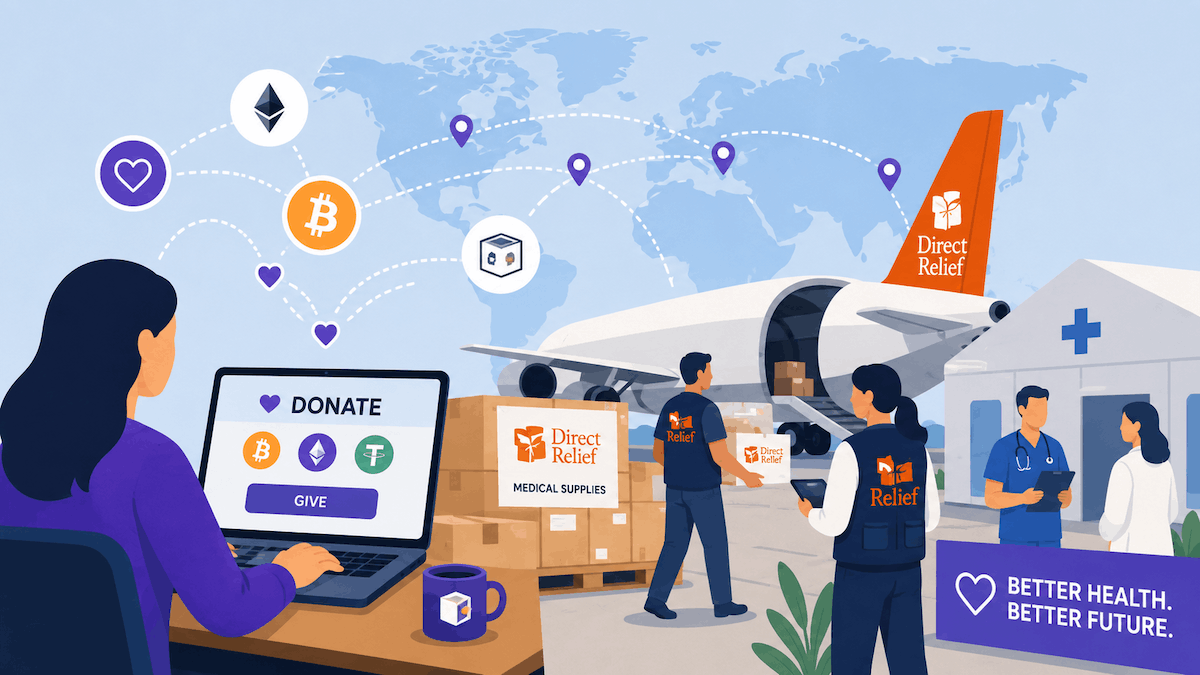
- Direct Relief supports healthcare providers in more than 90 countries through disaster preparedness, emergency response, and medical aid distribution.
- Innovation and logistics allow Direct Relief to position supplies before disasters occur, accelerating relief when crises strike.
- Cryptocurrency donations help humanitarian organizations access new donor communities and receive large, tax-efficient gifts.
- The future of philanthropy will increasingly combine technology, digital fundraising, and donor-centric giving experiences.
How Does Direct Relief Deliver Medical Aid Before Disasters Even Happen?
Direct Relief prepares for emergencies by strategically pre-positioning medical supplies, building long-term relationships with healthcare providers, and maintaining global logistics networks. This proactive model enables the organization to respond immediately when hurricanes, wildfires, earthquakes, or humanitarian crises occur, reducing delays that often cost lives.
When most people think about disaster relief, they picture emergency response teams arriving after a crisis has already unfolded.
Organizations like Direct Relief operate differently.
Rather than waiting for disaster to strike, Direct Relief invests heavily in preparedness, logistics infrastructure, and partnerships that allow life-saving medical aid to reach communities quickly and efficiently. This approach has helped the organization become one of the world’s most respected humanitarian nonprofits.
In a recent episode of This Week in Crypto Philanthropy, Ian Meyer, Director of Foundation Engagement at Direct Relief, joined The Giving Block’s Nick Mikhalevsky to discuss how innovation, technology, and digital fundraising are helping Direct Relief expand its global impact. See full episode below:
What Makes Direct Relief’s Disaster Preparedness Model Different?
Direct Relief’s approach centers on readiness.
Instead of mobilizing only after a crisis emerges, the organization builds infrastructure and partnerships before emergencies occur.
- Pre-Positioning Critical Supplies. Medical supplies are strategically located in areas vulnerable to disasters, ensuring healthcare providers can access resources quickly when needed.
- Supporting Local Healthcare Systems. Rather than replacing local providers, Direct Relief empowers existing healthcare networks with medicines, equipment, and training.
- Maintaining Global Logistics Capabilities. Complex supply chain systems allow the organization to move aid efficiently across borders and into challenging environments.
This combination of preparation and execution helps maximize the effectiveness of every donation.
Why Is Innovation So Important in Humanitarian Aid?
Innovation is no longer optional for nonprofits responding to global crises.
Humanitarian organizations use innovation to improve speed, transparency, and efficiency. Technologies such as real-time logistics systems, digital fundraising platforms, blockchain-based donations, and data analytics help nonprofits deliver aid faster while reducing administrative barriers and improving donor trust.
Direct Relief continuously explores new technologies that improve operational effectiveness.
Examples include:
- Supply chain optimization
- Digital inventory management
- Data-driven disaster forecasting
- Modern fundraising technologies
- Digital asset donations
The goal is simple: deliver more impact with fewer delays.
How Are Crypto Donations Changing Humanitarian Fundraising?
Cryptocurrency has become one of the fastest-growing forms of charitable giving.
According to The Giving Block’s 2026 Annual Report on Crypto Philanthropy, more than $100 million in crypto donations were processed through The Giving Block in 2025, with an average crypto donation of $11,019. Education and Health & Medicine were among the most-supported causes.
For organizations like Direct Relief, crypto donations provide several advantages:
- Access to New Donor Communities. Crypto donors are often younger, affluent, and highly philanthropic. The average crypto donor is significantly younger than traditional donors while maintaining strong giving capacity.
- Larger Average Gift Sizes. Crypto donations frequently exceed traditional online donation amounts. The Giving Block reported an average crypto gift size exceeding $11,000 in 2025.
- Tax-Efficient Giving. Donating appreciated cryptocurrency can help donors avoid capital gains taxes while potentially receiving charitable deductions.
- Faster Global Transactions. Blockchain technology enables borderless value transfer that aligns well with international humanitarian work.
What Does the Future of Philanthropy Look Like?
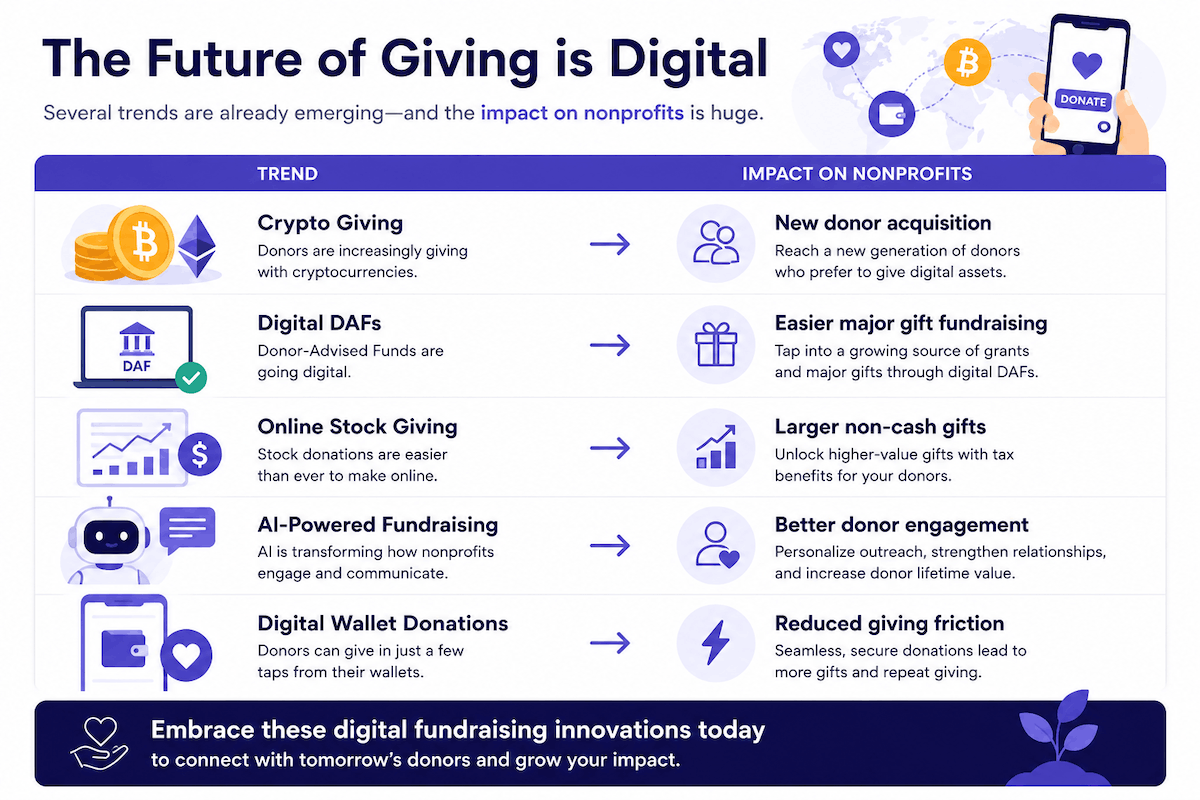
The future of philanthropy will be increasingly digital, donor-centric, and technology-enabled. Nonprofits that embrace cryptocurrency, digital assets, online donor-advised funds, and modern fundraising experiences will be better positioned to engage younger generations and participate in the ongoing transfer of wealth to digital-native donors.
Organizations that invest in these capabilities today will be better positioned to thrive tomorrow.
Lessons Nonprofits Can Learn From Direct Relief
Direct Relief’s success offers valuable insights for other organizations:
- Invest in Preparedness. The best response often starts before the crisis.
- Embrace Innovation. Technology can improve both operations and fundraising.
- Focus on Long-Term Relationships. Sustainable impact requires trusted partnerships.
- Meet Donors Where They Are. Today’s donors increasingly prefer digital giving experiences, including cryptocurrency, stock donations, and donor-advised funds.
How Can Donors Support Direct Relief?
Direct Relief offers multiple ways to contribute to its mission of improving healthcare access and responding to disasters worldwide.
Learn More About Direct Relief: https://www.directrelief.org/
Donate Crypto to Direct Relief: https://www.directrelief.org/crypto/
By supporting organizations that combine innovation, preparedness, and humanitarian expertise, donors can help ensure communities receive critical medical aid when they need it most.
Direct Relief demonstrates what modern humanitarian organizations can achieve when they combine operational excellence with forward-thinking innovation.
From disaster preparedness and global healthcare partnerships to embracing crypto donations and digital fundraising, the organization offers a blueprint for the future of nonprofit impact.
As donor behavior evolves and new technologies emerge, nonprofits that embrace innovation will be better equipped to serve their missions, engage the next generation of supporters, and respond to the world’s most urgent challenges.
Ready to reach the next generation of donors?
Accept cryptocurrency donations, donor-advised funds, and stock gifts through The Giving Block’s all-in-one digital fundraising platform and unlock new revenue opportunities for your mission.