














- AI helps nonprofits identify donors most likely to increase their giving.
- Predictive analytics can uncover major gift opportunities hidden within existing donor databases.
- AI saves fundraising teams time by automating donor research and prioritization.
- New forms of wealth, including cryptocurrency, stocks, and donor-advised funds, are creating new fundraising opportunities.
- Organizations that combine AI insights with strong donor stewardship can improve fundraising efficiency and long-term donor retention.
Every nonprofit has hidden major donors sitting inside its database.
The challenge isn’t finding more supporters. It’s identifying which existing donors have the greatest potential to make larger gifts.
For decades, fundraising teams relied on manual prospect research, wealth screening, and personal intuition to identify major donor opportunities. While those methods still have value, artificial intelligence is giving nonprofits a faster and more scalable way to uncover donor potential.
AI won’t replace fundraisers. But it can help them focus their time on the right donors at the right moment.
How Can AI Help Nonprofits Find Major Donors?
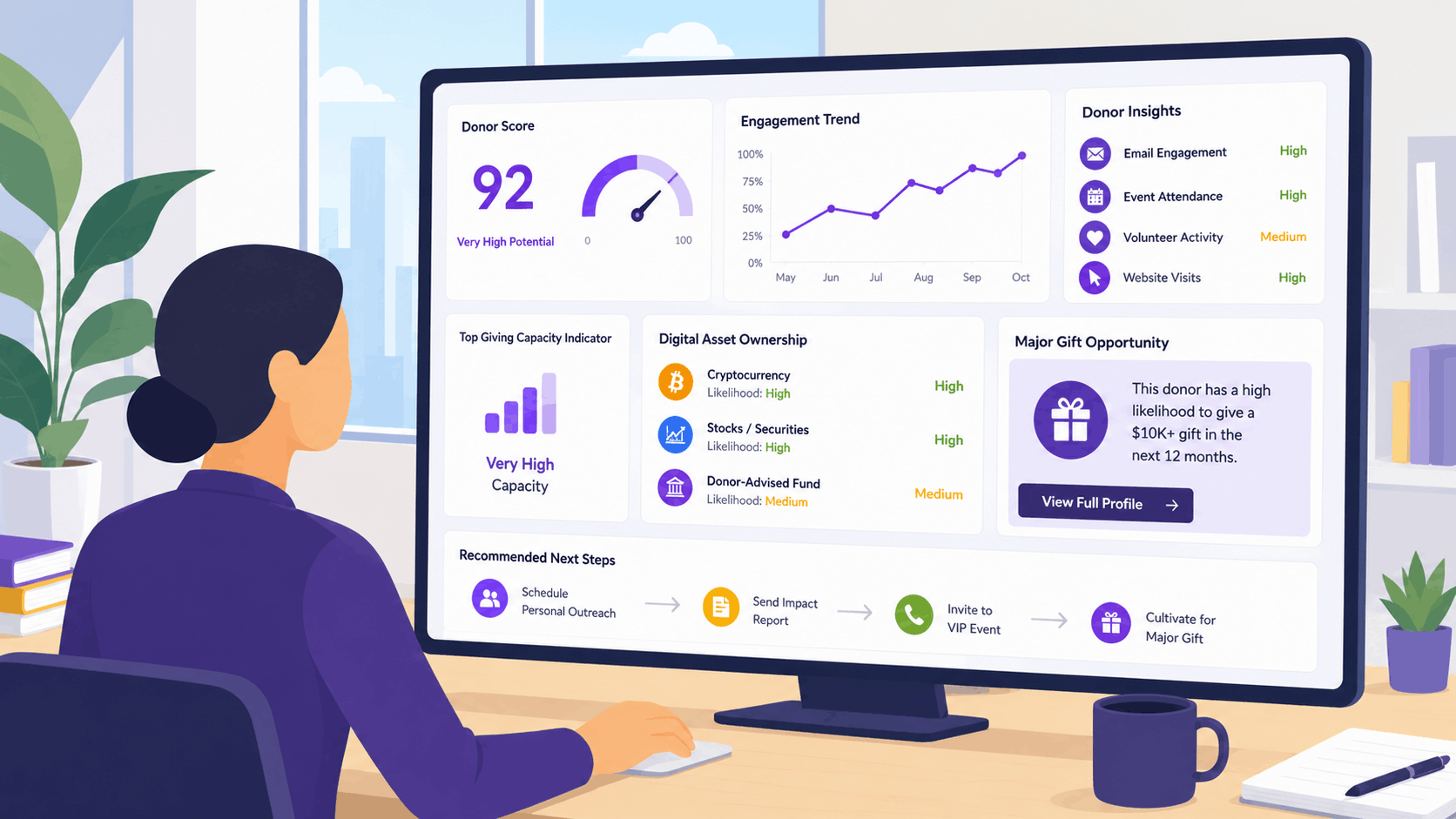
AI helps nonprofits identify high-value donor prospects by analyzing patterns across large amounts of donor data. Instead of manually reviewing thousands of records, AI can evaluate giving history, engagement activity, wealth indicators, and behavioral trends in seconds.
Why Traditional Prospect Research Takes So Much Time
For example, a donor who gives $100 annually may not appear to be a major gift prospect. However, if that same donor consistently attends events, opens fundraising emails, volunteers, and has significant financial capacity, AI may identify them as someone likely to increase their support.
These insights help development teams prioritize outreach and focus on donors who are most likely to deepen their relationship with the organization.
Rather than replacing traditional fundraising strategies, AI enhances them by helping fundraisers make smarter decisions based on data rather than assumptions.
The Hidden Major Donors Already in Your Database
Many nonprofits already have future major donors in their databases but lack the tools to identify them. AI can analyze giving history, engagement activity, event participation, and other signals to uncover supporters who may have significantly more giving potential than their donation history suggests.
One of the biggest fundraising challenges isn’t acquiring new donors. It’s recognizing untapped opportunities among existing supporters.
A donor who gives $100 annually may not immediately stand out. But if that donor regularly attends events, opens fundraising emails, volunteers, and engages with your mission, they may be a stronger major gift prospect than someone who made a larger one-time donation.
| Donor A | Donor B |
|---|---|
| One $250 gift | One $250 gift |
| No recent engagement | Attends events |
| Rarely opens emails | Opens fundraising emails |
| No volunteer activity | Volunteers regularly |
AI would likely prioritize Donor B because their engagement signals suggest a deeper relationship with the organization.
How Digital Fundraising Is Reshaping Major Gifts
For decades, nonprofits relied on traditional wealth indicators to identify high-capacity supporters. While those signals still matter, many donors today are building wealth through investments such as cryptocurrency, stocks, and donor-advised funds (DAFs).
This shift is creating new opportunities for nonprofits. Donors who may not appear on a traditional major gift prospect list could have significant giving capacity through appreciated investments and other modern wealth-building vehicles.
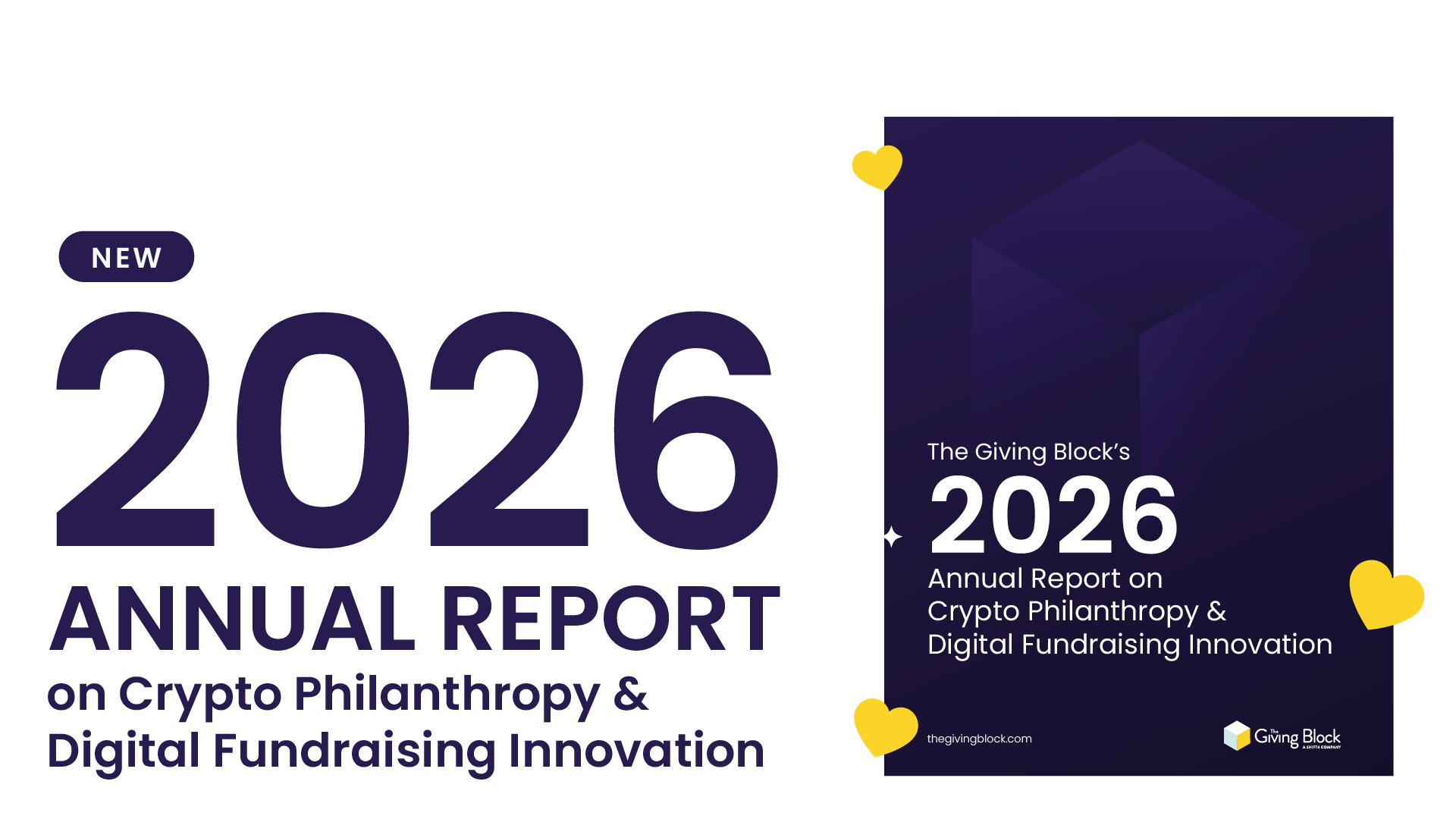
The Giving Block’s 2026 Annual Report found that the average cryptocurrency donation exceeded $11,000 in 2025, highlighting the growing role these donors are playing in charitable giving.
AI can help fundraising teams identify patterns that may indicate a donor is ready for a larger gift. By analyzing engagement history, giving behavior, event participation, and other signals, organizations can uncover opportunities that might otherwise go unnoticed.
This is especially important because many of today’s high-value donors don’t always fit traditional fundraising assumptions. They are often younger, highly engaged online, and looking for flexible, convenient ways to support the causes they care about.
AI Doesn’t Replace Fundraisers
One of the biggest misconceptions about AI in fundraising is that it replaces human relationships.
In reality, AI is most effective when it supports relationship-building. It can help fundraisers identify patterns, prioritize outreach, and uncover new opportunities, but it cannot replace the trust and personal connection that drive meaningful giving.
| AI Can Do | AI Can’t Do |
|---|---|
| Analyze donor data | Build trust |
| Identify giving patterns | Cultivate relationships |
| Prioritize outreach | Make a personal ask |
| Surface hidden opportunities | Inspire generosity |
The most successful fundraising programs will use AI to improve efficiency while keeping people at the center of the donor experience.
How Nonprofits Can Start Using AI Today
Getting started with AI doesn’t require a massive technology budget. Most organizations can begin by focusing on a few practical steps that improve donor insights and fundraising efficiency.
AI is only as effective as the information it analyzes. Remove duplicate records, update contact information, and improve CRM data quality.
Many fundraising platforms now offer AI-powered features that help identify donor trends, engagement patterns, and major gift opportunities.
Look beyond donation amounts. Event attendance, volunteer participation, and email engagement can reveal future giving potential.
As Digital Fundraising evolves, nonprofits should make it easy for supporters to give through crypto, stock, and donor-advised fund (DAF) donations alongside traditional giving methods.
AI can identify opportunities, but fundraisers build relationships. Use technology to support stewardship, not replace it.
The most successful fundraising teams will combine AI-powered insights with thoughtful donor engagement. Technology can help identify opportunities faster, but meaningful relationships remain the foundation of long-term fundraising success.
The Future of Fundraising Is Predictive
Fundraising is becoming more data-driven, more personalized, and more predictive.
Organizations no longer need to rely solely on manual research to identify major gift opportunities. AI can help surface patterns, prioritize prospects, and uncover hidden donor potential faster than ever before.
At the same time, donor wealth is changing. Crypto, stock, and DAF giving continue to grow as younger generations build wealth through digital and non-traditional assets. The Giving Block’s 2026 Annual Report highlights how digital fundraising channels are becoming increasingly important as nonprofits adapt to shifting donor behavior and the broader transfer of wealth to younger generations.
The nonprofits that embrace both AI and modern giving methods today will be better positioned to attract, cultivate, and retain the next generation of major donors.
The Next Generation of Major Donors Is Already Here
Ready to future-proof your fundraising strategy?
The Giving Block helps nonprofits unlock crypto, stock, and DAF donations while building fundraising programs designed for the next generation of donors. Learn how modern digital fundraising can help your organization identify new opportunities and grow long-term donor support.