













- U.S. giving reached a record $617.2B in 2025. Donors continued to give despite economic uncertainty, policy changes, and rising nonprofit needs.
- Individual donors remained the backbone of philanthropy. As federal funding became less reliable, nonprofits had to refocus on building stronger supporter relationships.
- Bequests rose nearly 17%. This signals growing momentum around planned giving and the Great Wealth Transfer.
- DAFs and non-cash assets became harder to ignore. Fidelity Charitable donors recommended $18.3B in grants, with most contributions coming from assets like stock, crypto, and private holdings.
- Crypto, stock, and DAF giving are now major gift channels. Nonprofits that make these options easy to find and use will be better positioned to grow donor revenue.
What are the key takeaways from Giving USA 2026?
Giving USA 2026 shows that U.S. charitable giving reached $617.2 billion in 2025, rising 5.7% in current dollars and 3.0% after inflation. The biggest lesson for nonprofits is that individual generosity remains resilient, especially when organizations clearly communicate urgent needs, build donor trust, and make giving easy across cash, crypto, stock, and DAFs.
In 2025, all major sources of giving increased, including individuals, bequests, foundations, and corporations. Bequests rose nearly 17%, a major signal that the long-discussed Great Wealth Transfer may already be shaping nonprofit fundraising. The year also showed how quickly donors can respond when federal funding cuts and policy shifts put essential programs at risk.
For nonprofits, the takeaway is clear: the future of fundraising will be driven by stronger individual donor relationships, better storytelling, and more flexible giving options.
How much did Americans give to charity in 2025?
Americans gave an estimated $617.2 billion to U.S. charities in 2025, according to Giving USA 2026: The Annual Report on Philanthropy for the Year 2025. That represented a record total in current dollars and a 3.0% increase after inflation.
The number matters because 2025 was not a calm year for nonprofits. Organizations faced political volatility, economic pressure, rising demand for services, and federal funding disruptions. Yet donors still responded. Giving USA’s headline finding is not simply that generosity grew. It is that donors stepped up when nonprofits made the stakes visible.
For fundraisers, this confirms a critical planning principle: giving follows clarity. When supporters understand what is at risk, why the mission matters now, and how their gift can help, they are more likely to act.
What did Giving USA 2026 reveal about individual giving?
Giving USA 2026 reinforced that individual donors remain the foundation of American philanthropy. Individuals accounted for 64% of total giving dollars in 2025, even as the long-term share of giving from individuals has declined from 80% in 1985.
This is the tension nonprofits need to understand. Individual giving is still the largest source of philanthropy, but the donor base is changing. Giving is increasingly tied to wealth, appreciated assets, financial markets, and major gift behavior. In 2025, mega-gifts totaled $19.2 billion, roughly 4% of all dollars given by individuals, according to Chronicle of Philanthropy coverage of the Giving USA report.
That does not mean small and mid-level donors matter less. It means nonprofits need a better path for moving supporters from first gift to recurring gift to major gift. Donors who start with a $25 emergency appeal today may become the planned giving, stock, DAF, or crypto donors of the future.
Fundraising takeaway for nonprofits
Nonprofits should treat individual giving as infrastructure, not a campaign category. That means stronger storytelling, cleaner donation experiences, better segmentation, and a complete menu of ways to give.
Did federal funding cuts change how nonprofits fundraised in 2025?
Federal funding cuts forced many nonprofits to rely more heavily on private donors in 2025. CARE reported its highest-ever fiscal year after individual donors responded to the loss of traditional funding, while NRDC saw donors respond to appeals tied to federal policy shifts and environmental regulation threats.
This may be one of the most important lessons from Giving USA 2026: when public funding becomes unstable, private donor relationships become mission-critical.
The organizations that performed well did not simply ask for replacement revenue. They explained what the funding gap meant for people, communities, services, and outcomes. That is a different kind of donor communication. It connects policy disruption to human impact.
What nonprofits should do now
Nonprofits should build donor messaging around three questions:
- What changed?
- Who is affected?
- How can a donor help right now?
That structure works across email appeals, major donor conversations, crypto campaigns, DAF outreach, and planned giving messaging.
What does the 17% rise in bequests mean for nonprofits?
The nearly 17% rise in bequests suggests planned giving may be entering a more active phase as older donors transfer wealth to heirs and charities. Giving USA experts cautioned that more data is needed, but the trend strengthens the case for investing in legacy giving now.
For nonprofits, the practical lesson is clear: planned giving should not be limited to large institutions with mature development teams. Smaller and mid-sized nonprofits can begin by educating loyal donors about wills, beneficiary designations, and non-cash assets.
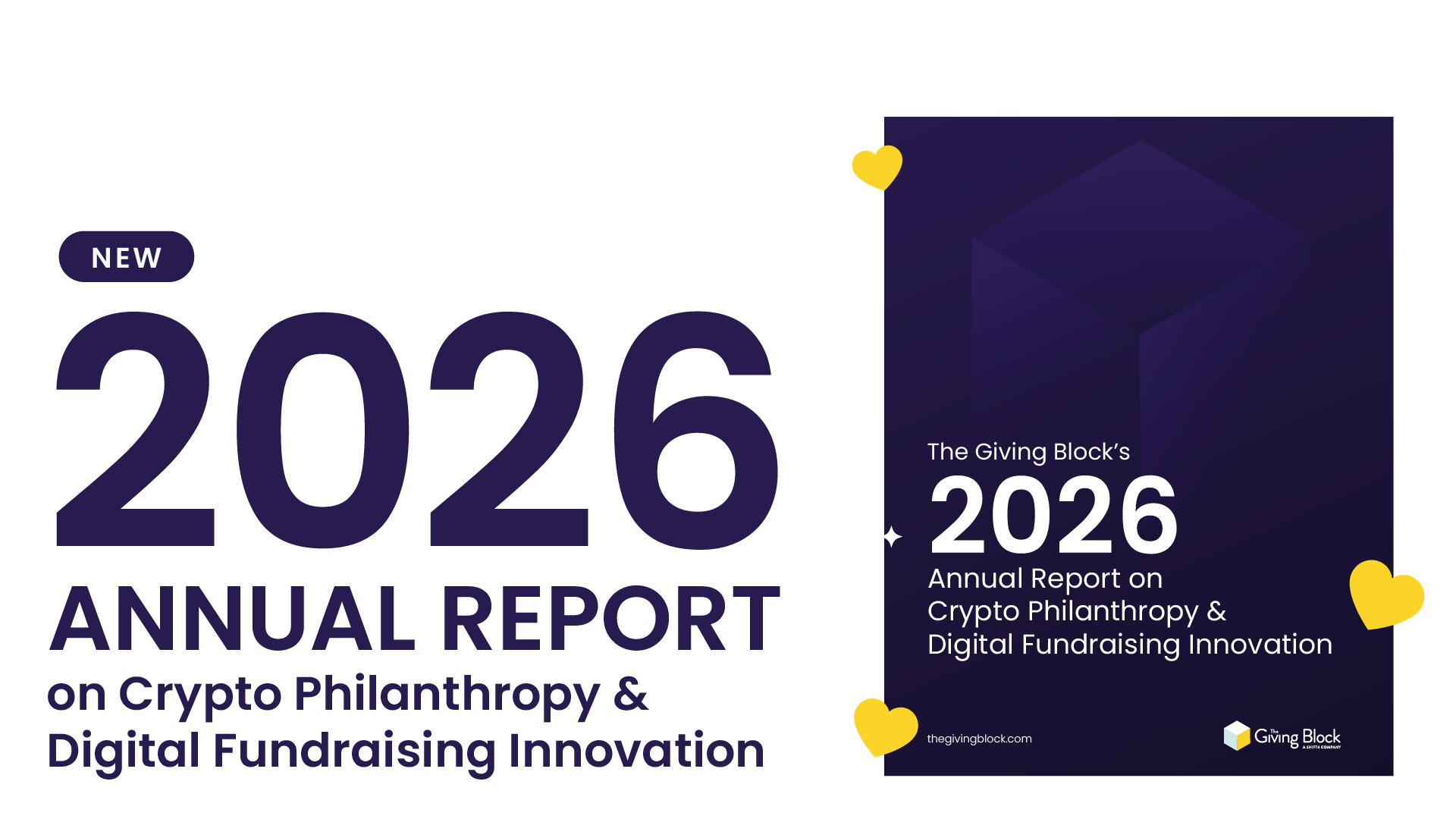
The Giving Block’s 2026 Annual Report on Crypto Philanthropy & Digital Fundraising Innovation notes that the Great Wealth Transfer will reshape donor expectations, with younger donors expecting intuitive, flexible, and secure digital giving experiences.
Planned giving is becoming digital giving
The next era of planned giving will not be limited to estate conversations. It will include digital wallets, donor-advised funds, stock portfolios, crypto assets, and mobile-first donation flows. That is why nonprofits should modernize the full giving experience before donors are ready to make their largest gifts.
Why did stock market growth matter for 2025 giving trends?
Giving USA 2026 showed that strong financial markets helped lift charitable giving in 2025. The Chronicle of Philanthropy reported that giving and the S&P 500 have tracked closely over time, and experts warned that growing reliance on market-linked gifts could make giving more volatile.
That trend matters for every nonprofit, not only those with major gift teams. When donor wealth is held in appreciated assets, nonprofits need to be ready to accept appreciated assets.
This is where crypto donations, stock donations, and DAF donations become practical fundraising tools, not side projects. The Giving Block processed more than $100 million in crypto donations in 2025, surpassed $300 million in crypto donated since 2018, and reported an average crypto gift size of $11,019 in its 2026 annual report.
Why are DAFs and non-cash assets central to 2026 fundraising strategy?
DAFs and non-cash assets are becoming central to nonprofit fundraising because donors increasingly use appreciated assets to plan, grow, and distribute charitable dollars. Fidelity Charitable donors recommended $18.3 billion in grants in 2025, while 69% of contributions came from non-cash assets such as stocks, crypto, and private assets.
This supports one of the biggest lessons from Giving USA 2026: nonprofits cannot think about individual giving as cash-only giving. Donors are increasingly funding philanthropy from where their wealth already lives—in investment accounts, donor-advised funds, cryptocurrency wallets, private equity, restricted stock, and other appreciated assets.
Fidelity Charitable’s 2026 Giving Report shows how large this shift has become. In 2025, donors recommended 3 million grants, supported 226,823 nonprofits, and made 2,141 grants of $1 million or more. Nonprofits that make DAF, stock, and crypto giving easy to find are better positioned to receive larger, more strategic gifts.
DAF giving is also relationship-driven
One important finding from Fidelity’s report is that DAF donors are not simply moving money anonymously. In 2025, 77% of grants went to charities donors had previously supported, and 95% included the account name or donor name and address.
That means DAF giving should be treated as a stewardship opportunity. Nonprofits should thank DAF donors quickly, track repeat giving, and build follow-up journeys that connect donors to measurable impact.
What nonprofits should do with this trend
Nonprofits should add clear giving pathways for DAFs, stock, crypto, and other non-cash assets wherever they already ask for donations. That includes year-end appeals, campaign landing pages, major gift conversations, newsletters, and planned giving materials.
The goal is not to replace cash giving. The goal is to give donors more ways to support the mission when they are ready to make a larger, more tax-smart gift.
How should nonprofits adapt to Giving USA 2026 giving trends?
Nonprofits should respond to Giving USA 2026 by strengthening individual donor relationships and expanding how donors can give. The organizations best positioned for 2026 will offer seamless digital giving options for cash, crypto, stock, and DAFs while improving donor stewardship and impact storytelling.
Here is the strategic shift: nonprofits cannot only ask donors for money. They need to make it easy for donors to give from where their wealth already lives.
For many donors, that means a checking account. For others, it means appreciated stock, a donor-advised fund, Bitcoin, Ethereum, USDC, or another crypto asset. The Giving Block’s 2026 report found that stablecoin giving surged in 2025, with donors giving more than $32 million in USDC, RLUSD, USDT, DAI, and other stablecoins.
What role do crypto donors play in the future of individual giving?
Crypto donors represent a growing segment of individual donors who are younger, affluent, and generous. The Giving Block’s crypto donor research found the average crypto donor is about 38 years old, compared with 65 for the average traditional donor, and the average crypto donation was $10,978 in 2024.
This is especially relevant in a Giving USA 2026 context. If nonprofits are being pushed to rely more on private donors, they need to understand emerging donor segments, not just legacy donor segments.
Crypto donors are not only giving because they like technology. The Giving Block’s donor research identifies two major motivations: Crypto Evangelists often give to advance adoption and “pay it forward,” while Optimistic Investors often give for tax-efficient reasons.
Crypto giving is also part of a broader non-cash giving strategy. The Giving Block’s 2026 annual report describes digital donors as people who hold wealth in crypto, stocks, and DAFs and expect to support causes in the same way they manage finances: digitally, efficiently, and flexibly.
Fidelity Charitable’s 2026 Giving Report also reinforces that cryptocurrency is no longer a fringe asset in philanthropy. Fidelity Charitable donors contributed $362 million in cryptocurrency in 2025, and total cryptocurrency contributions to Fidelity Charitable have reached $1.7 billion since 2015. For nonprofits, this validates the importance of making crypto giving visible alongside stock and DAF options.
What should nonprofits do after reading Giving USA 2026?
After Giving USA 2026, nonprofits should focus on donor relationships, non-cash giving readiness, and urgent storytelling. The report showed generosity is resilient, but it also revealed risk: nonprofits are more exposed to funding cuts, market volatility, and concentration among wealthy donors.
The path forward is not to chase every fundraising trend. It is to build a more resilient fundraising engine.
1. Rebuild individual donor pipelines
Create stronger pathways for first-time donors, monthly donors, mid-level donors, and major donors. In a year when federal support can change quickly, private donor relationships are a sustainability strategy.
2. Make non-cash giving visible
Do not bury crypto, stock, or DAF options in a footer or PDF. Put them on your donation page, campaign pages, year-end appeals, major gift materials, and donor education content.
3. Tell donors what is at stake
The strongest campaigns connect a big external trend to a specific human need. “Federal funding cuts” is abstract. “Families will lose access to services unless private donors step in” is actionable.
4. Steward digital donors like major donors
A crypto donor, stock donor, or DAF donor may be making a high-capacity gift. Fast receipts, personalized thank-yous, and clear impact reporting can turn a one-time transaction into a long-term relationship.
See The Giving Block resources to learn more about how to best build your relationship with donors.
Giving USA 2026 shows generosity is changing, not disappearing
Giving USA 2026 is ultimately a hopeful report. Americans gave $617.2 billion in 2025. Bequests surged. Individual giving remained the largest source of charitable dollars. Donors responded when nonprofits explained urgent needs.
But the report is also a warning. The nonprofits that thrive in the next era will not be the ones that rely on old fundraising habits. They will be the ones that deepen donor trust, modernize giving options, and prepare for a future where major gifts may come through crypto wallets, stock portfolios, DAFs, and estate plans.
For nonprofits, the takeaway is simple: individual generosity is still powerful. The question is whether your organization is ready to receive it in every form.
Ready to turn Giving USA 2026 insights into fundraising growth?
The Giving Block helps nonprofits accept crypto, stock, and DAF donations directly through a secure digital giving experience. Build a modern donation strategy that meets today’s donors where they are and prepares your organization for the next generation of philanthropy.