










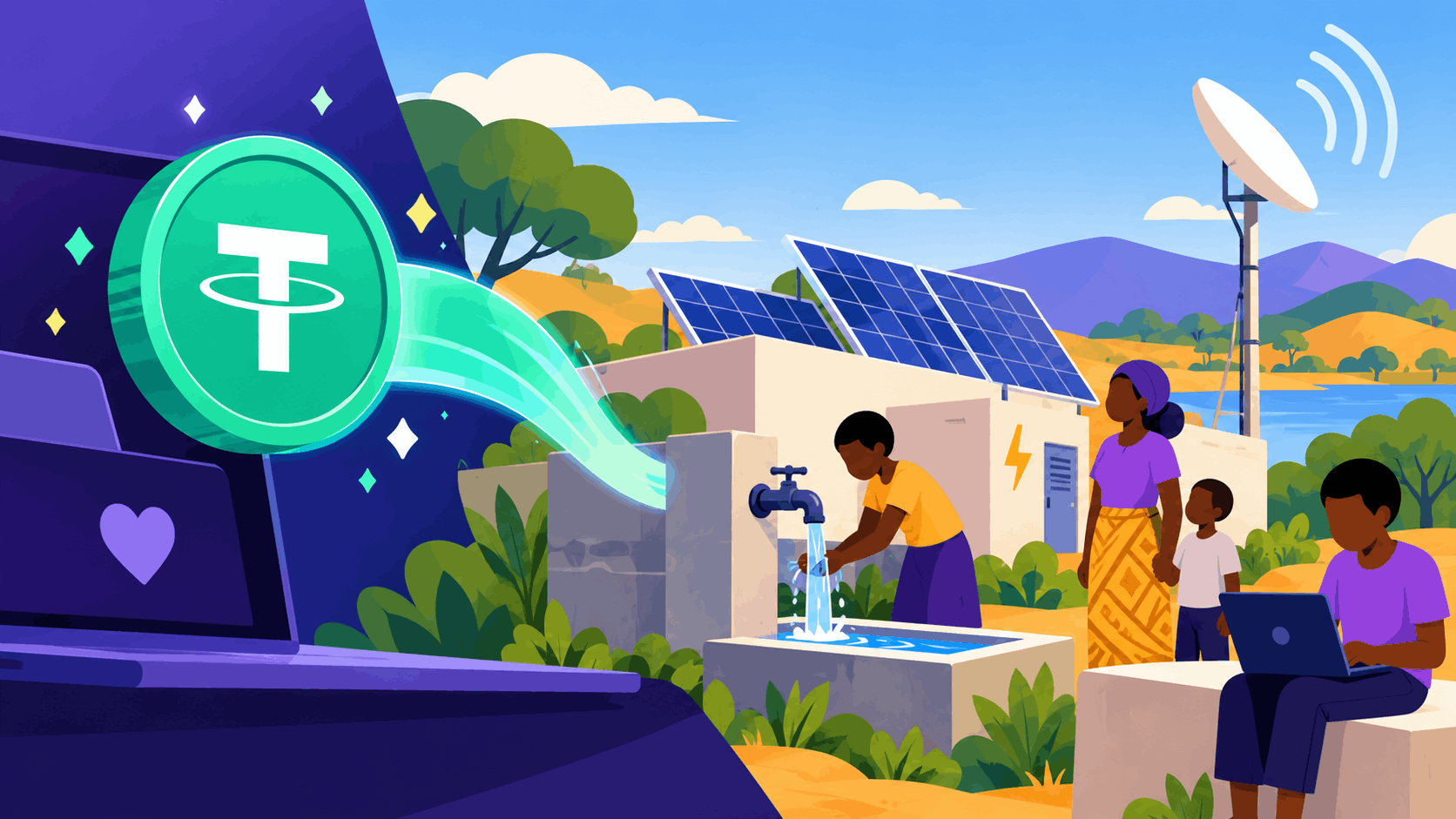
- An anonymous donor gave $2.6 million in Tether (USDT) to World Vision through The Giving Block. World Vision will use the gift to help advance an innovative water, energy, and connectivity initiative in Zambia.
- The crypto donation will help fund three water systems paired with 100-kilowatt renewable energy microgrids, connecting access to safe water with reliable renewable power.
- World Vision also plans to expand digital connectivity and infrastructure monitoring, creating opportunities across education, healthcare, entrepreneurship, and other essential services.
- The gift demonstrates the power of Crypto Philanthropy to turn digital assets into tangible impact and the potential for cryptocurrency to become a meaningful major-gift channel for nonprofits.
What happens when $2.6 million in cryptocurrency moves from a digital wallet into the hands of a nonprofit?
In this case, it could eventually mean water flowing from a tap, renewable electricity powering community infrastructure, children accessing digital learning resources, and local entrepreneurs connecting to the modern economy.
World Vision received an anonymous $2.6 million cryptocurrency donation in Tether (USDT) through The Giving Block. The organization plans to put the gift toward its Water Innovation Front in Zambia, an ambitious initiative connecting clean water, renewable energy, digital connectivity, and transparent development data.
The gift is a powerful example of what Crypto Philanthropy can make possible: transforming wealth held in digital assets into resources that can create tangible, lasting impact.
How will World Vision use the $2.6 million crypto donation?
World Vision will use the $2.6 million crypto donation as catalytic funding for its Water Innovation Front in Zambia. The initiative will help finance three water systems paired with 100-kilowatt renewable energy microgrids, with the goal of improving access to safe water while creating electrical capacity that can support broader community needs.
The model recognizes that many of the challenges facing underserved communities are interconnected.
Modern water infrastructure often depends on electricity for pumping, treatment, monitoring, and maintenance. Reliable energy can also support schools, healthcare delivery, businesses, and communications.
Connecting communities beyond water and energy
The initiative also plans to expand access to high-speed internet through Starlink satellite connectivity.
Greater connectivity can create opportunities for digital learning, communication, entrepreneurship, digital financial services, access to health information, and other resources that increasingly depend on reliable internet access.
By combining these systems, World Vision aims to test a model in which essential infrastructure becomes a foundation for broader economic and social development.
How will World Vision measure the impact of the initiative?
World Vision plans to pair physical infrastructure with digital monitoring tools to better understand how the new systems perform over time. The organization intends to use mWater for data collection, monitoring, mapping, and management while publishing project performance and progress through a public online dashboard.
That transparency is an important part of the initiative.
Building infrastructure is one part of sustainable development. Understanding whether that infrastructure continues to perform effectively and identifying when additional intervention may be needed is another.
For donors and partners, that can also create greater visibility into how philanthropic capital translates into real-world outcomes.
What does this gift show about the power of Crypto Philanthropy?
Crypto Philanthropy enables cryptocurrency holders to turn digital assets into funding for charitable causes. World Vision’s $2.6 million USDT gift demonstrates that potential at major gift scale.
A crypto donation can become funding for medical research. It can support humanitarian relief, education, environmental conservation, or essential community infrastructure.
“This gift is a milestone, not just for World Vision but for crypto philanthropy. What drew me to crypto back in 2017 was the belief that people everywhere could build a new economic infrastructure: open, borderless, and permissionless. Now we’re seeing that vision turn into clean water, renewable power, and connectivity for families in Zambia. I’m deeply grateful to our anonymous donor and to The Giving Block for bridging the crypto community and the communities we serve. This is proof that crypto can be one of the most powerful forces for good in philanthropy today.”
Why do crypto donations matter for nonprofit fundraising?
Crypto donations give nonprofits a way to engage donors whose wealth may be held in digital assets rather than cash. By making cryptocurrency part of a broader fundraising strategy, nonprofits can provide another way for supporters to give while creating opportunities for major gifts and relationships with digital donors.
The World Vision gift is especially notable because it was made in Tether (USDT), a stablecoin designed to maintain a value tied to the U.S. dollar.
But the larger lesson is not about any one cryptocurrency.
What can nonprofits learn from a $2.6 million crypto gift?
Organizations cannot know exactly where their next transformational gift will come from, or which asset a donor may want to contribute.
That makes this gift about more than its $2.6 million value. It shows how wealth created and held digitally can ultimately support something decidedly tangible: water flowing from a tap, electricity supporting community needs, access to online resources, and infrastructure designed to help communities become more resilient.
Is your nonprofit ready for its next crypto donor?
The next major donor to your organization may already hold the asset they want to give.
The Giving Block by Shift4 enables nonprofit organizations to easily and securely accept cryptocurrency donations alongside stock, donor-advised fund (DAF), card and ACH gifts on one platform. Since 2018, thousands of charities around the world have used our innovative fundraising services to diversify and grow their donation revenue and engage young donors by meeting them where they give.
Interested in accepting cryptocurrency donations?
Learn how cryptocurrency is creating new opportunities for donors and nonprofits.